Deskfolk
Hand it off, walk away, return to results. Bots running on your own Claude Code, Codex or other agent take on multi-day jobs in a split-pane workbench: every turn on a flow and a task map, files kept and annotated by job, and the work checked before it counts as done.
Deskfolk
Deskfolk is a desktop app for handing work to a team of Bots and coming back to results. Bots have names, duties and boundaries; they chat one to one, join groups, get @mentioned and hand work to each other. Multi-day, multi-step jobs that need rework are safe to hand off too: when a Bot says done, the app checks first. The desktop app is built with Native Shell, on macOS and, as a preview, Windows.
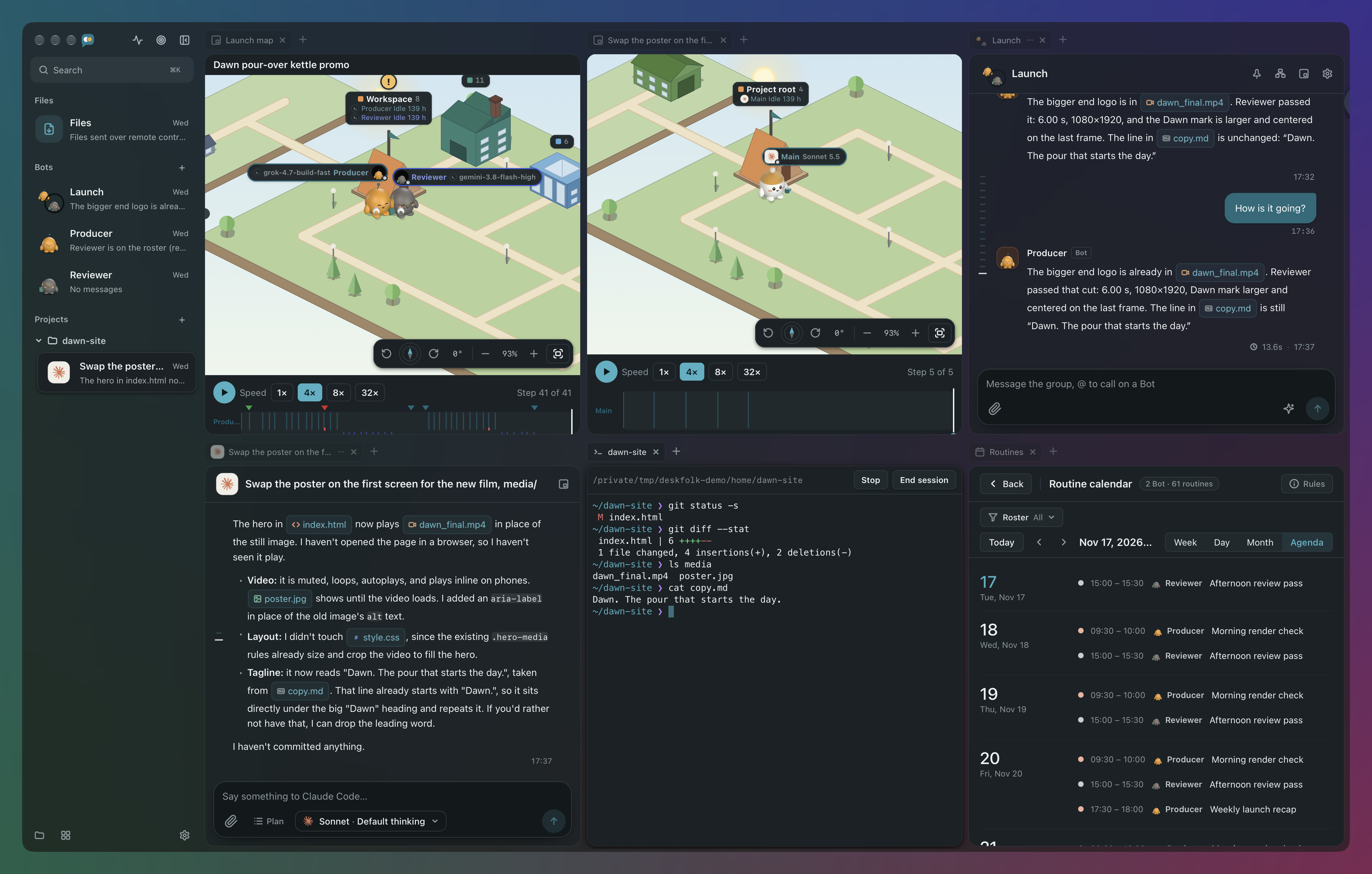
Runs on the agent you already use
No API key needed: pick the Claude Code, Codex, Grok, OpenCode, Antigravity or ZCode you are signed in to on this computer, or any ACP agent, and Bots run on your own sign-in. Or connect OpenAI, Anthropic, Xiaomi MiMo, Qwen, DeepSeek, OpenRouter or any OpenAI- or Anthropic-compatible endpoint, or Ollama, LM Studio and llama.cpp on your own machine. The work, the files and the keys stay on your computer.
It asks as much as you want it to
A permission mode (read-only, ask first, auto or allow all) says what Bots may do without asking, and what waits on you is marked on the conversation list. Say stop and it stops: a stop is a record only you can lift, and your next line sets the work going again.
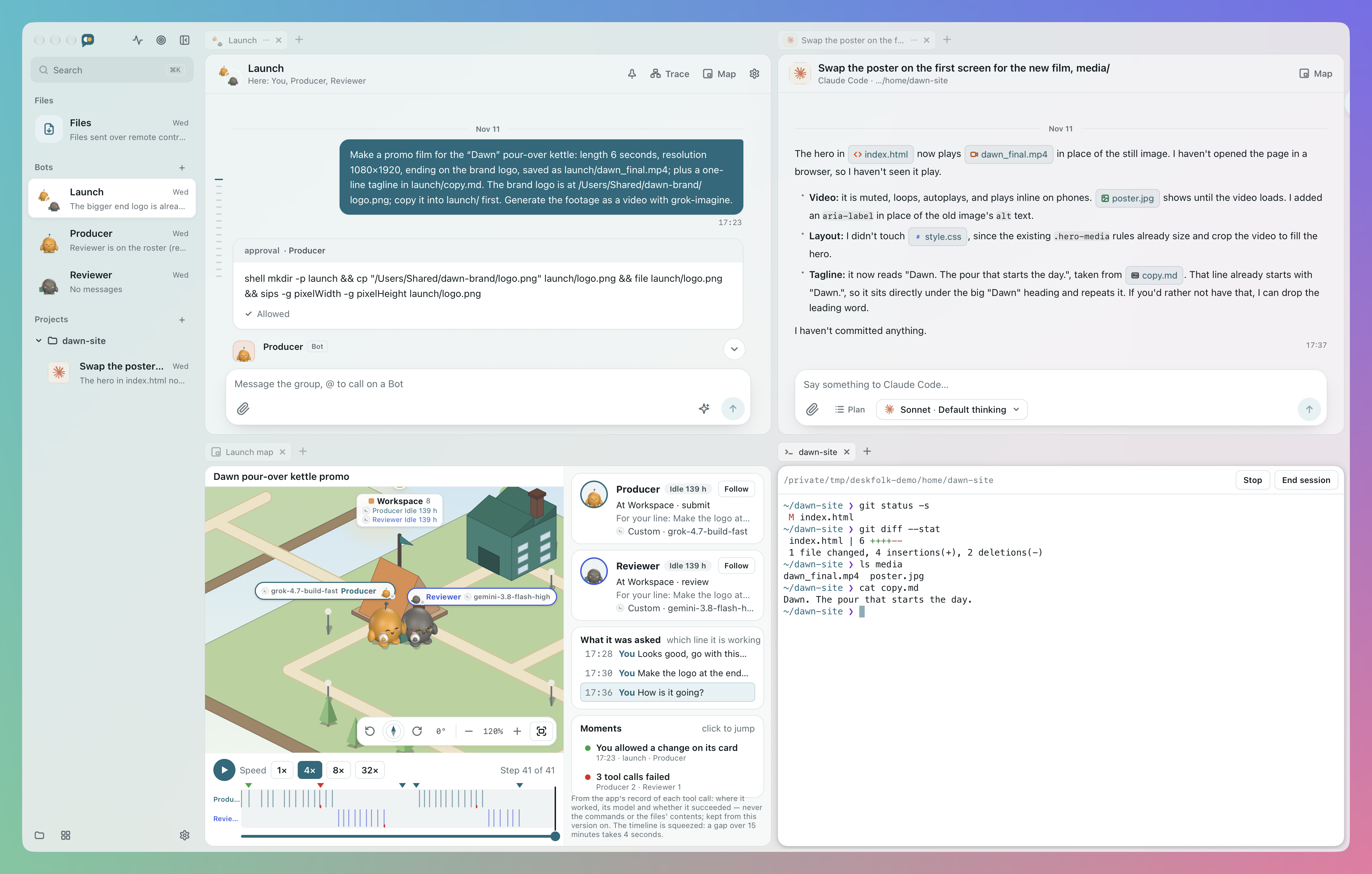
It shows its work
A job is one tab: tickets on the left, each with who makes it and who reviews it; the flow in the middle, a card per turn marking the ticket it worked on, the files it handed over, the model it ran on and why. The task map plays the job back as a town of its folders, step by step, so you can see where each Bot worked.
Done has a definition
A ticket moves only on a delivery, checks run on your computer, a review backed by evidence and your approval; a Bot writing "PASSED" moves nothing. Files are kept by job and ticket and open right in the app: images, audio and video, PDF, text and code, HTML and Office documents. Find fault right on the file, on a line, an image region or a moment of a video, and the Bot that handed it over works through your notes one by one. Spend is tracked by model, conversation and Bot, with an optional daily cap.
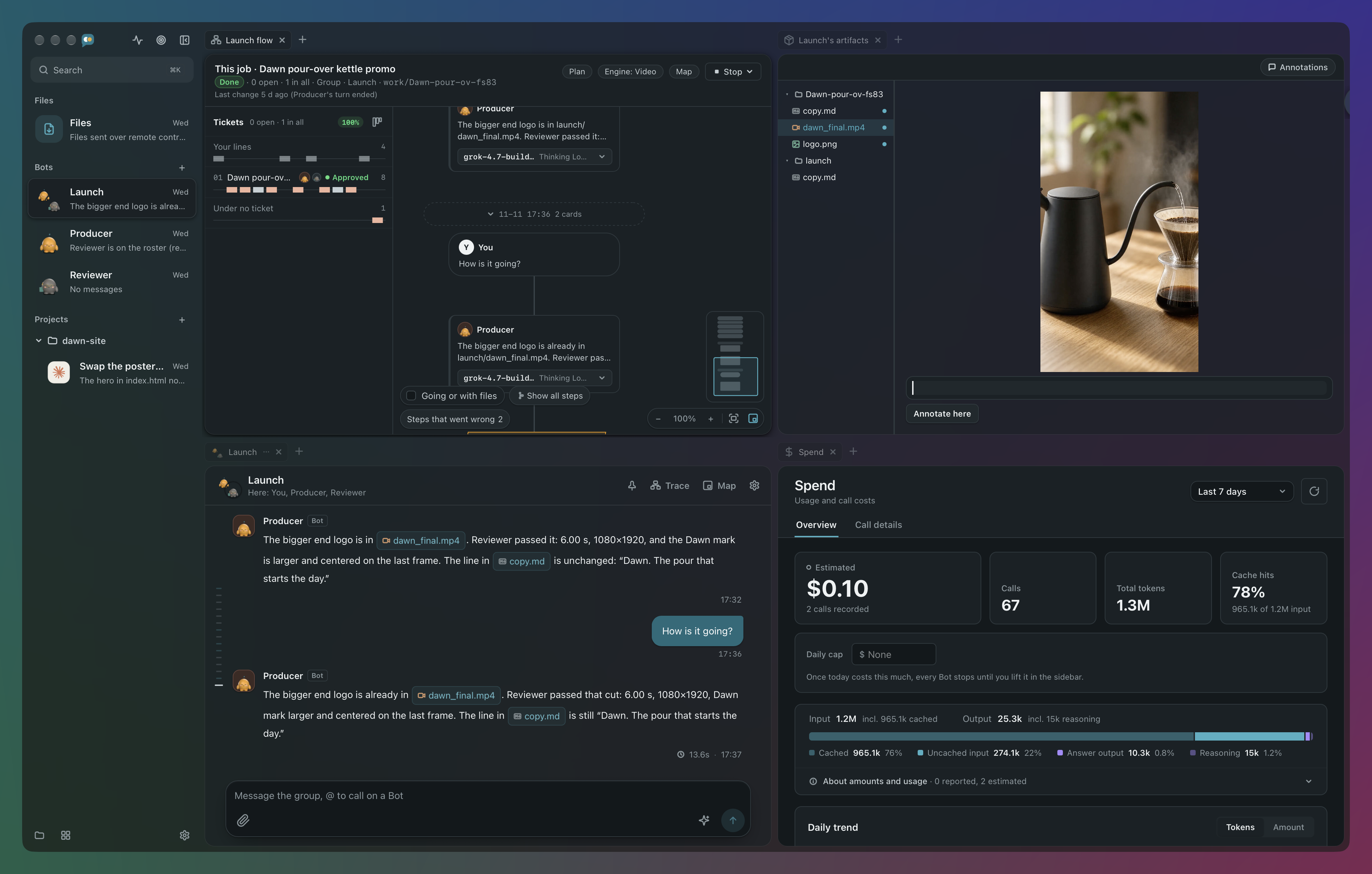
Project sessions
Talk to Claude Code or Codex itself in a folder of yours, in the same window as your Bots: the project's files and the page it changed, a terminal, the session's task map, and the Roles that set how the app's own steps run.
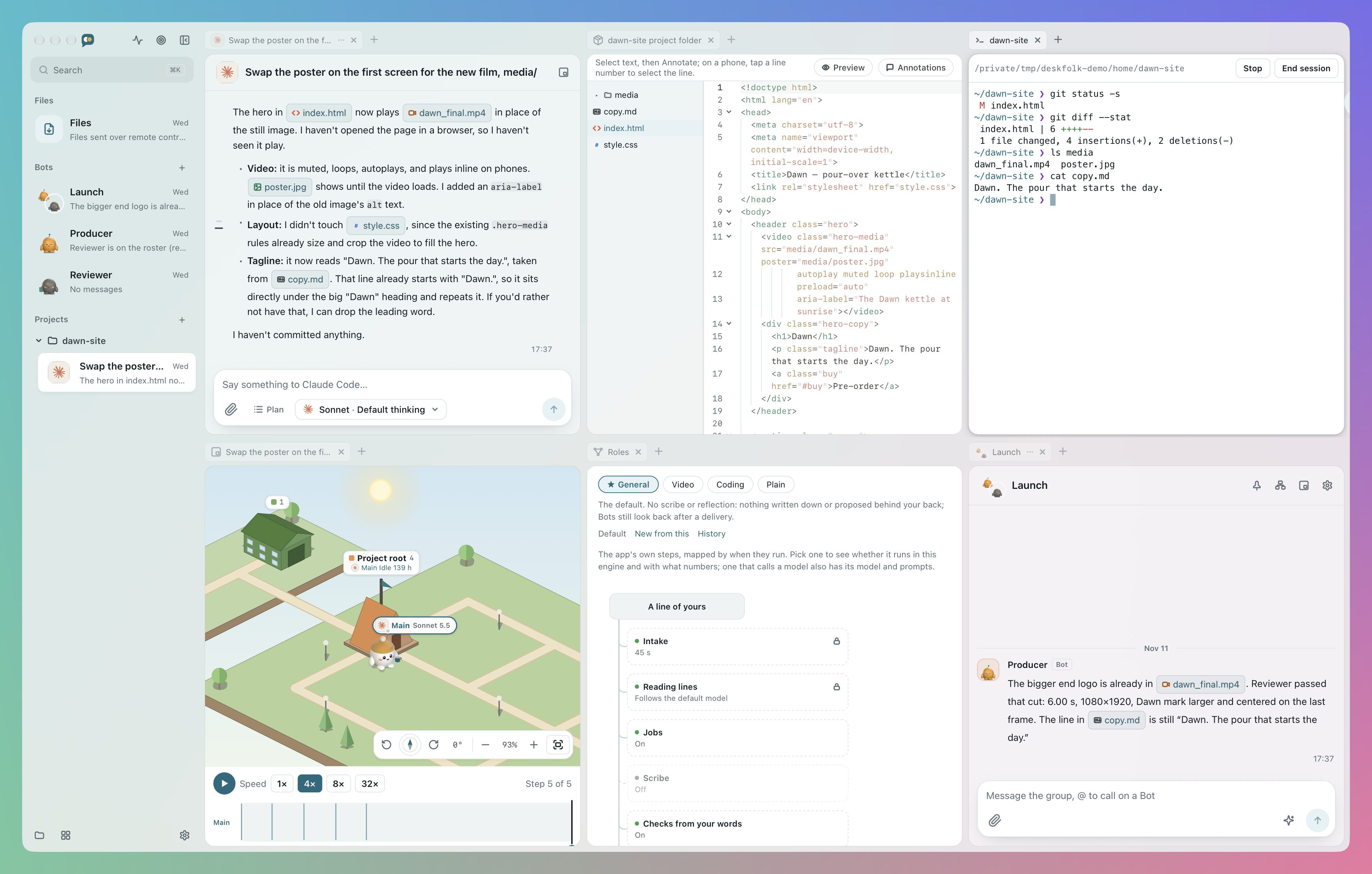
A workbench of your own
Split the window into panes of conversations, task maps, flows, terminals, the routine calendar, Spend and Usage, in a light or dark theme; on macOS and Windows 11 the panes can let the window's glass show through. Bots can start work on a daily or weekly routine, and they get better with use: after a delivery, each Bot that tripped up reads the job's record and works what it learned into its own memories and skills. On macOS, pair a phone through a relay you run yourself, end-to-end encrypted, to follow and answer your conversations away from the desk.